- Industry
- Events · weddings · reunions · baby announcements
- Type
- Multi-template website builder SaaS
- Roles
- Platform admin · member site owner
- Stack
- PHP 5.6 · mysql_* API · MySQL (myevent) · FCKeditor
- Proof
- 5 screens · local working restore
The problem
Event hosts needed wedding, reunion and baby microsites without hiring a developer for each celebration — before modern hosted builders were commonplace.
Constraints
Delivery stayed inside the client's stack, tenancy, compliance and media-ownership boundaries. Where a choice was forced (suite vs owned plane, BYOC vs CPaaS, local vs cloud models), the architecture section below records the trade-off rather than a marketing rewrite.
Business requirements
Platform admin template desk, member control panel, FCKeditor pages, vertical modules and static HTML publish into per-user folders.
Architecture
Legacy PHP + MySQL: admin and member cpanel write to myevent; generator emits static sites for cheap hosting.
Engineering challenges
- Restore fidelity — PHP 5.6 + mysql_* on modern XAMPP for demo.
- Publish pipeline — member edits must regenerate static HTML reliably.
The solution
Restored All Star Occasions stack with admin templates, member signup and working publish path — screenshots on this page.
My role
Legacy restore and documentation — local runbook, demo capture and architecture write-up.
Technology stack
Production considerations
- Legacy stack is for preservation demo — not a greenfield security baseline.
- Static publish avoids server-side runtime for guest traffic.
Screenshots
Marketing home
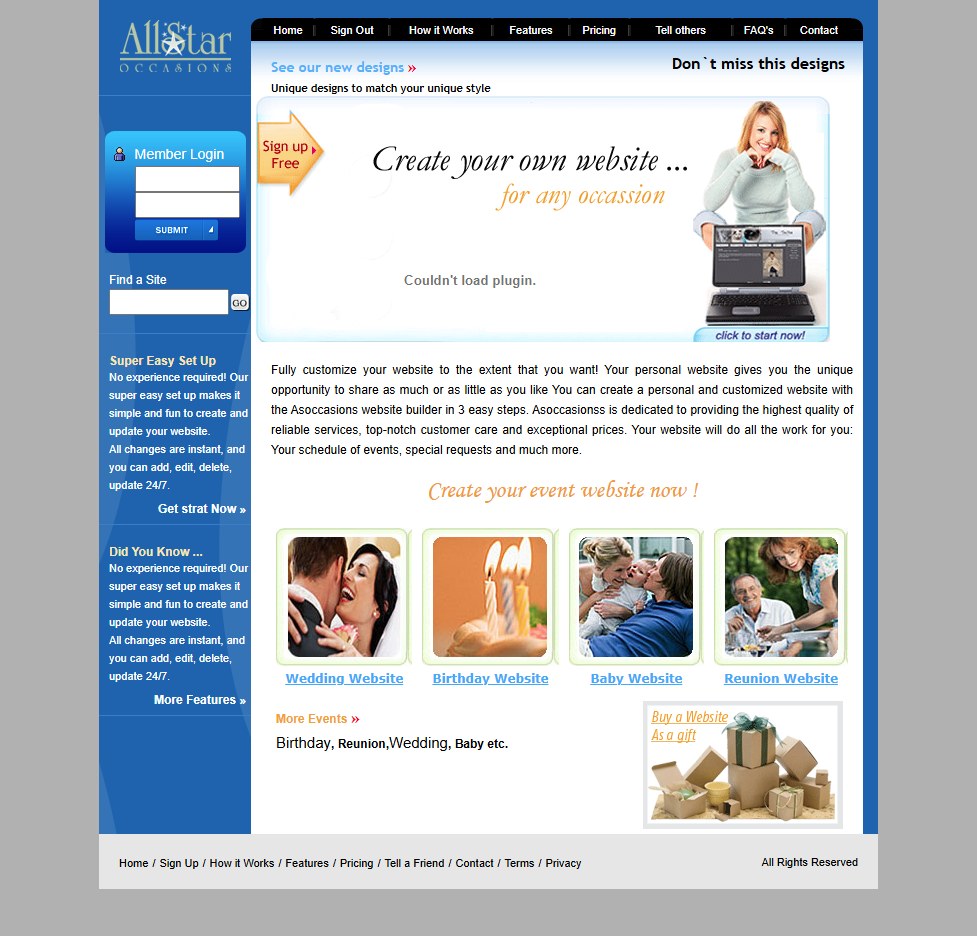
Central landing routes visitors to vertical modules — wedding, birthday, baby and reunion — with member login and free-trial signup flows.
Platform admin desk
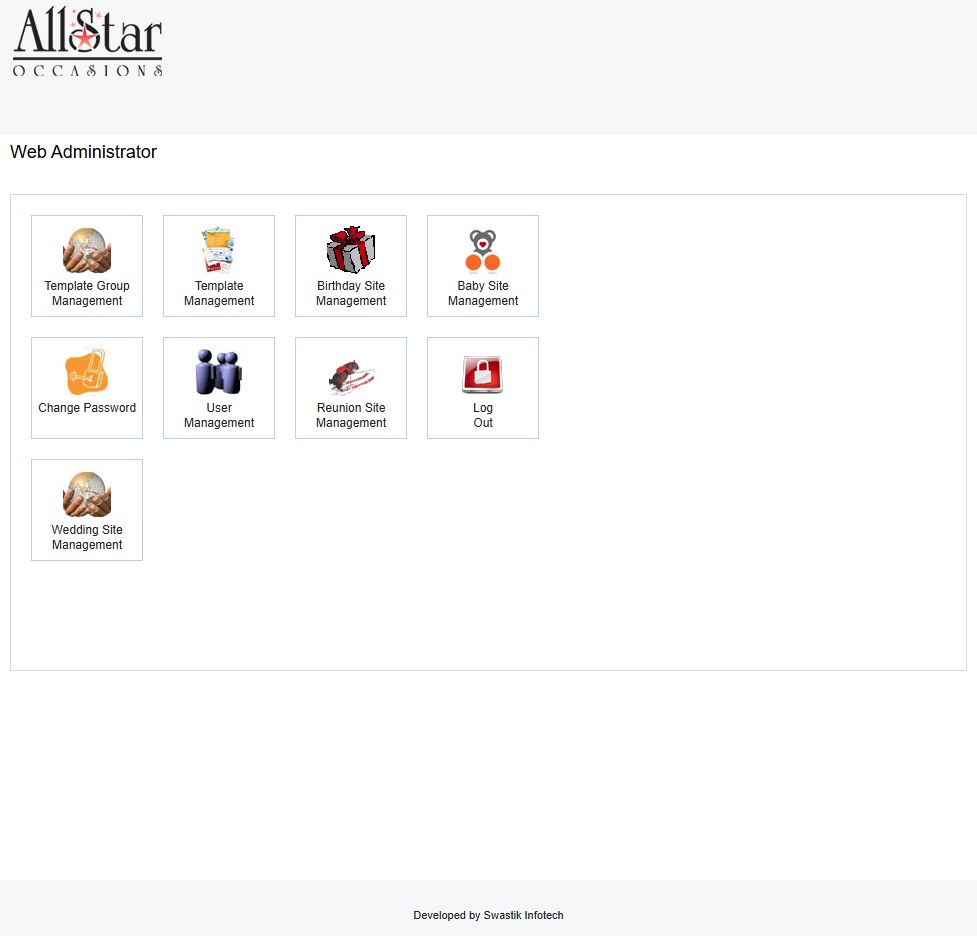
Operators manage template groups, HTML skins, wedding/reunion/baby accounts, passwords and cross-site user records from one grid.
Member control panel
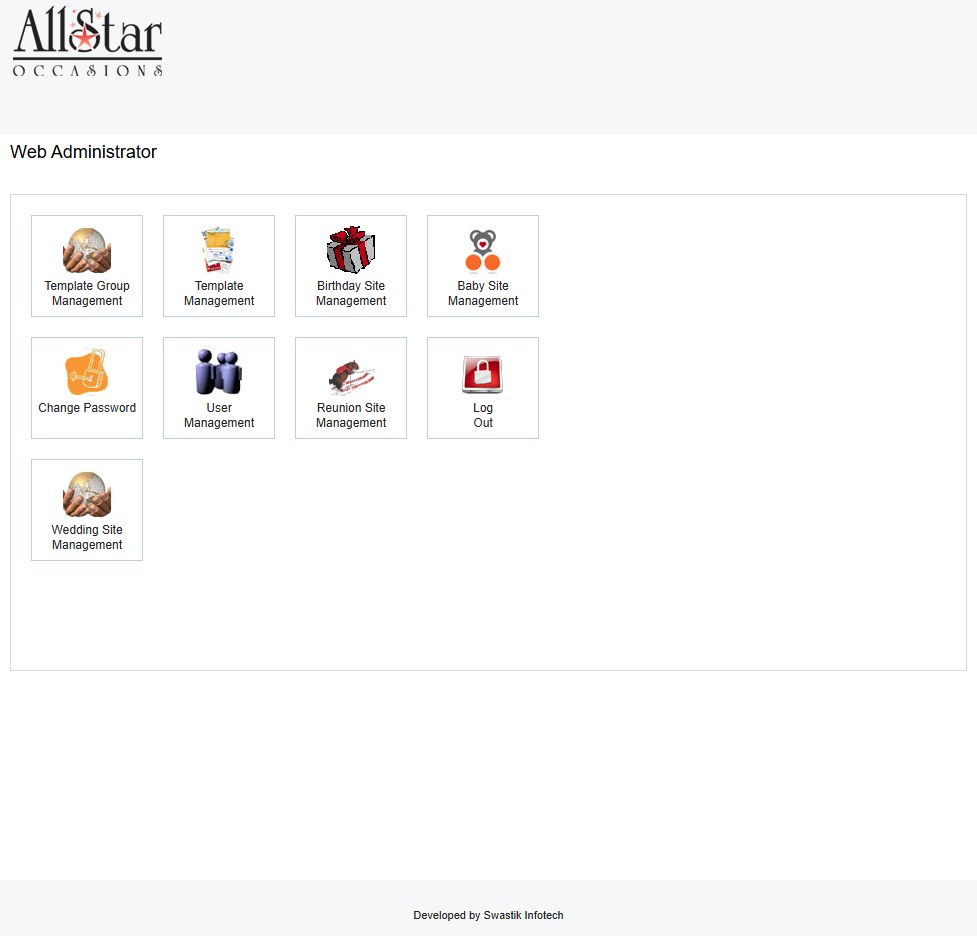
After login, members land on a cpanel with shortcuts to edit Welcome, Our Story, Wedding Party, event details, contact and header sections.
Page editor
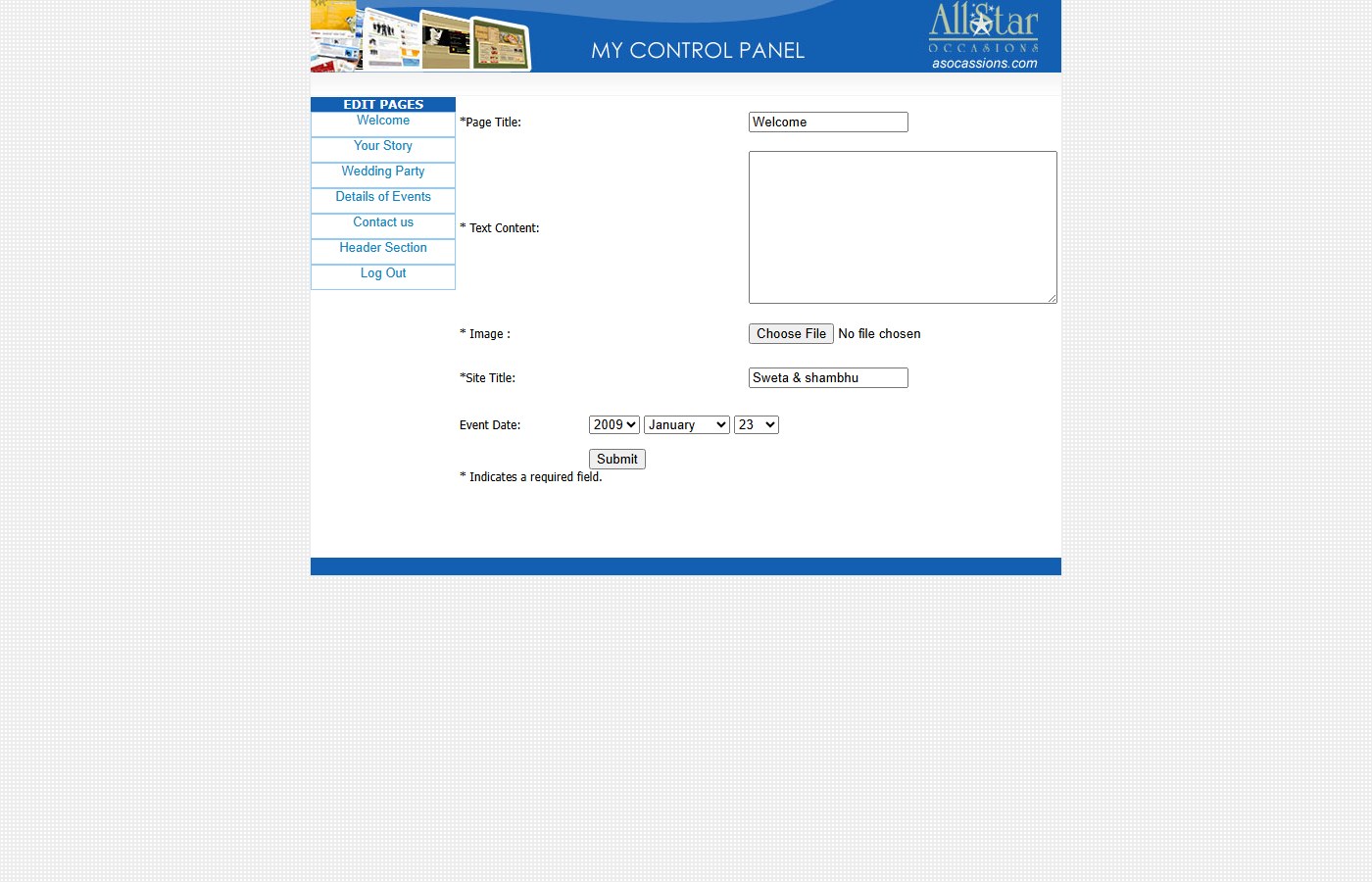
Each page exposes title, rich text, hero image, site title and event date fields — saved to MySQL then re-rendered into static HTML under the member folder.
Published wedding site
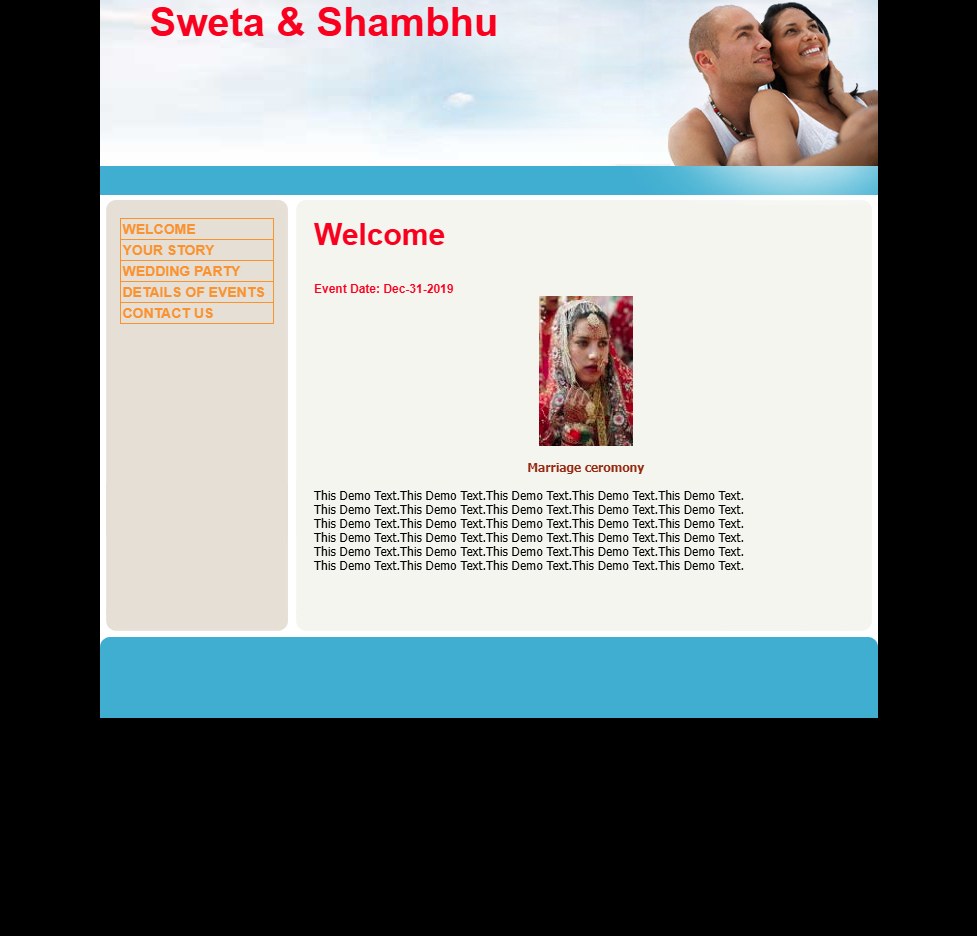
The publish step writes index.html, story, party, events and contact pages into a username directory — ready for subdomain mapping (e.g. username.asoccasions.com).
Architecture diagram
flowchart LR
  ADM[Admin desk]
  MEM[Member cpanel]
  DB[(MySQL myevent)]
  GEN[Static HTML generator]
  SITE[Published microsite]
  ADM --> DB
  MEM --> DB
  MEM --> GEN --> SITE
Outcomes
Restored or delivered system documented with screenshots and local demo — portfolio write-up only.
FAQ — buyer & architecture questions
Ten common questions about this case study, fit, and engagement.