I architect and implement production software that connects AI agents, business applications, workflow automation, real-time communications, data and cloud infrastructure. Work spans vertical SaaS and industry ops (school ERP, hospitality & restaurant CMS, PMS, loyalty, PM/workgroups, device license desks, FSM marketplaces), custom CRM/ERP, AI agents and RAG, equity-research tooling, messaging CPaaS, AI voice, n8n automation, WebRTC, CCaaS, FreeSWITCH and Asterisk—with telecom as a deep specialization, not the whole definition of the practice.
Mathematics & Statistics → MCA → Systems Architecture → VoIP → SaaS → AI → Product Engineering. Formal education in maths, computing and management — plus verified AI, data and project credentials used on delivery. That path is first-hand experience, not a keyword list.
Education
UndergraduateBSc Mathematics & StatisticsDSB Campus, NainitalPostgraduate · MathematicsMSc MathematicsDSB Campus, NainitalPostgraduate · ComputingMCA — Master of Computer ApplicationsIGNOU (Indira Gandhi National Open University)Postgraduate · ManagementMBA — Systems & MarketingSMU (Sikkim Manipal University)
Professional / technical credentials
Google · CredlyGoogle Data Analytics Professional CertificateAnalytics and measurement for operations · Verify on Credly →Anthropic Education · SkilljarBuilding with the Claude APITool use and Claude API application patterns · Verify credential →Google · CredlyGoogle Project Management CertificateDelivery, scope and stakeholder practice · Verify on Credly → · Product Engineering →NPTEL · IIT RoorkeeProject Management for ManagersElite · July–October 2023 · 61% · Certificate →SWAYAMDigital ForensicsSWAYAM 4-credit course · 81% · proctored Dec 2023 — supporting education for DFIR / evidence analysis, not lab accreditationUdemyMachine Learning & TensorFlow / PythonModel work when an LLM is the wrong tool
TEAM
Delivery alongside the architecture practice
UnifiedPBX.in is led by Pankaj Joshi as solution architect and implementer. These associates support delivery, research and AI-assisted engineering on scoped work.
Nishi Joshi
Team associate · delivery & client coordination
Supports project delivery, documentation and client communication on UnifiedPBX engagements — alongside architecture and implementation work led by Pankaj Joshi.
Python developer associate with four years of focused AI and Python learning. Contributes on scripts, data helpers and AI-assisted tooling under review — while completing 12th grade studies.
Associate role: learning-oriented delivery on scoped tasks, not standalone production ownership.
HOW THIS PRACTICE IS HIRED
I design the system. Then I build it.
Architecture is not delivered as a slide deck and handed to someone else. I work across product architecture, frontend, backend, APIs, data, AI, real-time communications and infrastructure to take systems from business requirements to production.
I work as an architecture-and-implementation owner rather than a single-layer specialist. Frontend, backend, data, AI, real-time communications and infrastructure can be designed as one system when the project requires it — so CRM, automation, voice and the model share state instead of fighting at the seams.
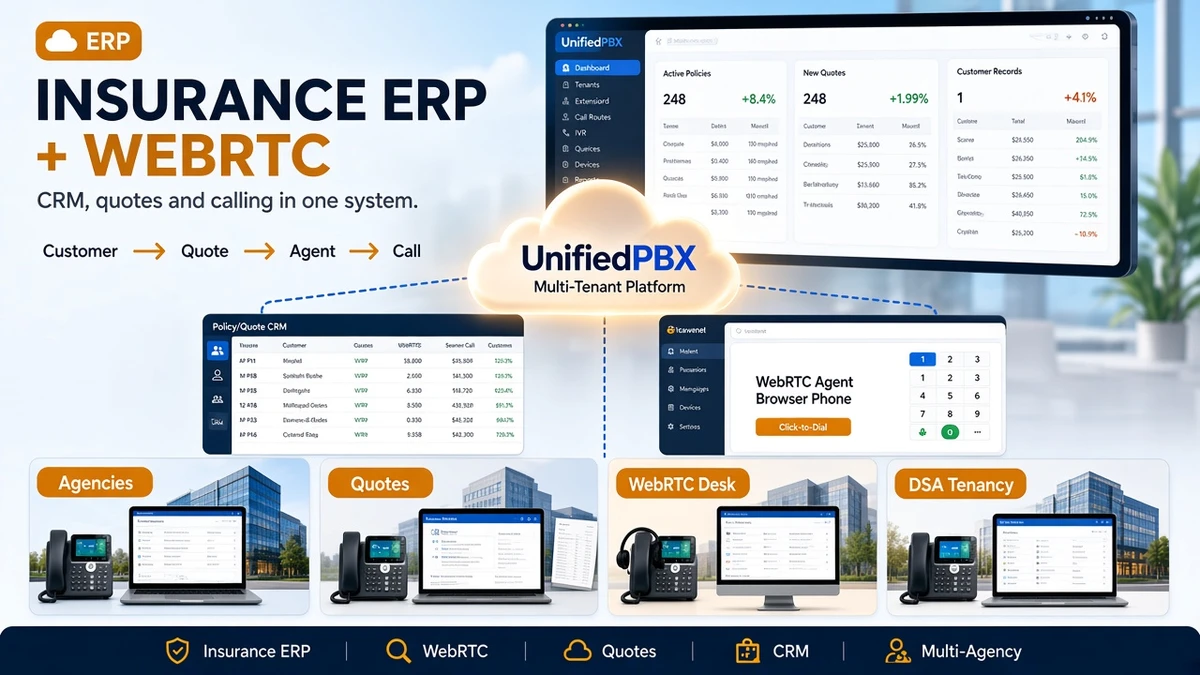
UnifiedPBX.in is the practice site for that work. If the brief is Clixxo-class CRM/ERP, an insurance desk with click-to-dial, a school ERP modernization, restaurant CMS + mobile API, membership loyalty, device license & AMC, expert marketplace + telephony, AI agents over private knowledge, a CCaaS seat product, or a hosted PBX that must isolate tenants—the architecture is written first and the implementation follows that drawing.
NDAs are normal. Confidential names stay off this site. Fifteen-plus public pages show representative architecture — see the case studies and demo playlist.
What “solution” means here
A buyer usually needs an outcome — qualify every lead, bill every port, answer every inbound, automate a workflow without losing audit, or keep domain knowledge off a public LLM. The stack is chosen after that outcome is named.
Named business outcomeApplication + data modelAI agents · RAG · automationVoice · WebRTC · CRM / ERPLinux · cloud · observe · failover
WHAT I ARCHITECT
Five planes. One architecture. One owner.
Business applications, AI, automation, communications and infrastructure share state. Keeping those layers under one architectural direction reduces the handoff problems that occur when separate vendors own different parts of the system.
n8n · Make · APIs · Webhooks · Workflow orchestration
Deterministic automation where rules are reliable — CRM/ERP write-back, lead orchestration, document routing and human-in-the-loop gates. n8n automation when the CRM motion is the bottleneck; custom APIs when the workflow is the product.
04 · REAL-TIME COMMUNICATIONS
FreeSWITCH · Asterisk · WebRTC · SIP · CCaaS
FreeSWITCH and Asterisk cores — including the UnifiedPBX control plane and FreeSWITCH CCaaS. FusionPBX when that is the operating surface. Queues, recording, trunks, DID/SBC and WebRTC desks that survive corporate NAT.
PostgreSQL as the default system of record; Redis for jobs; Kafka / RabbitMQ when events must fan out; Docker and careful Kubernetes; AWS / Azure / GCP; OpenTelemetry, Prometheus and Grafana so operations can see the path when AI tools, APIs or media fail.
AI AGENT & AUTOMATION ENGINEERING
AI systems that do more than generate text
Agents can retrieve enterprise knowledge, call APIs, interact with CRM/ERP, execute workflows, process information and escalate decisions to humans when required.
AI agentsMulti-agent workflowsRAGEnterprise knowledgeTool / function callingAI voice agentsLead orchestrationDocument processingCRM/ERP automationn8n workflowsHuman-in-the-loopAI evaluationAI observability
The right architecture uses AI where reasoning adds value, deterministic software where rules are reliable, automation where workflows are repeatable, and human approval where business judgment is required.
Architecture choice
Business processNamed outcome
↓
RulesDeterministic
AIReasoning
HumanJudgment
↓
Automationn8n · APIs · webhooks
Business systemCRM · ERP · voice
Signature architecture
What I actually architect when AI, business systems and communications must share state.
Connected product
CRM
ERP
Telecom
↓
AI / AgentsRAG · Tools · Voice
↓
Automationn8n · APIs
EventsKafka · RabbitMQ
↓
ProductionCloud · Docker · Linux
ObserveOTel · Prometheus · Grafana
WHERE I ADD THE MOST VALUE
The starting point is a stage, not a technology preference
EXISTING PRODUCTION SYSTEM
Debug, stabilize and modernize
One-way audio, dead trunks, tenant leaks, slow APIs, flaky AI tools or campaign load that times out. I read the pcap, the schema and the traces before I propose a rewrite.
MISSING CAPABILITY
Add the architectural plane the product lacks
AI agents or RAG over internal knowledge. WebRTC click-to-call. CRM write-back. Automation without losing audit. An AI queue in front of human agents — on a real SIP path.
MANUAL BUSINESS PROCESS
Automate without losing control of data and rules
Lead follow-up, document processing, GST billing, HR self-service, claims triage, appointment setting. Accelerate the work without giving up accuracy, audit or the system of record.
GREENFIELD PRODUCT
Architecture → MVP → production platform
Hosted seats, vertical SaaS, insurance or telecom ERP, AI + CRM products, Indian-law or markets software. Draw tenants, data, AI boundaries and media first — then cut an MVP that can survive production.
TECHNOLOGY — SUMMARY
Tools follow the plane. The plane follows the outcome.
About is for trust and architecture ownership. Detailed inventories live on the service briefs — not as a keyword wall here.
Don't rewrite what already works. Find the bottleneck, stabilize it, then introduce the missing capability. Rewriting a working FreeSWITCH dialplan because a slide deck prefers microservices is not architecture.
The usual sequence is: capture the real path, name the bottleneck, stabilize media or data, then add the missing plane (AI agents, RAG, WebRTC, automation, a second tenant, a GST module, a new carrier). That includes SIP traces, API and query work, tenancy reviews, and taking a vendor demo to a deploy that operations can run.
INDUSTRIES THESE SYSTEMS LAND IN
The domain supplies the rules. The platform supplies the path.
Healthcare and insurance, home-service and clinic inbound desks, financial services, telecom and VoIP operators, public-sector and legal teams, Indian-market desks, messaging SaaS, manufacturing, retail and QSR, aviation and real-estate operations, and SMBs whose advantage is an internal process rather than a public knowledge cutoff.
Selected case studies across AI, business platforms and communications
Client identities are omitted where the work is confidential. Grouped by outcome so different buyers can find themselves — AI & automation, business platforms and real-time communications.
Claude Code, OpenAI Codex, Cursor and the current GPT / Claude / Gemini models are part of the daily bench. They do not choose the architecture, they do not skip review, and they do not ship untested changes onto a trunk that is already carrying traffic.
Claude CodeOpenAI CodexCursorReplitGPTClaudeGemini
THE SAME PERSON, ELSEWHERE
This page is the canonical profile. The others are records.
Search engines and buyers should treat unifiedpbx.in/about.html as the long-form identity. LinkedIn, Upwork and GitHub are corroboration — this site is not a copy of those summaries.
Questions startups and enterprises ask before hiring
How this practice fits your product line—voice, vertical SaaS, CRM/ERP, AI and rescue—and how engagements actually start.
Pankaj Joshi is a solution architect and product engineer based in Delhi, India. UnifiedPBX.in is his public practice site—case studies, architecture notes, product estimators and service pages for teams that need production software. It is not a hosted PBX login, a generic dev shop homepage, or a mass-market SaaS seat.
Services describe how we work (architecture, full-stack, VoIP, AI, rescue). Solutions are outcome hubs (AI call center, custom CRM/ERP, vertical products). Products are packaged RFQ estimators tied to public case studies. Projects are proof—screenshots, honest scope and working demos. Most buyers start at Projects or Solutions, then use Products or Contact for scope.
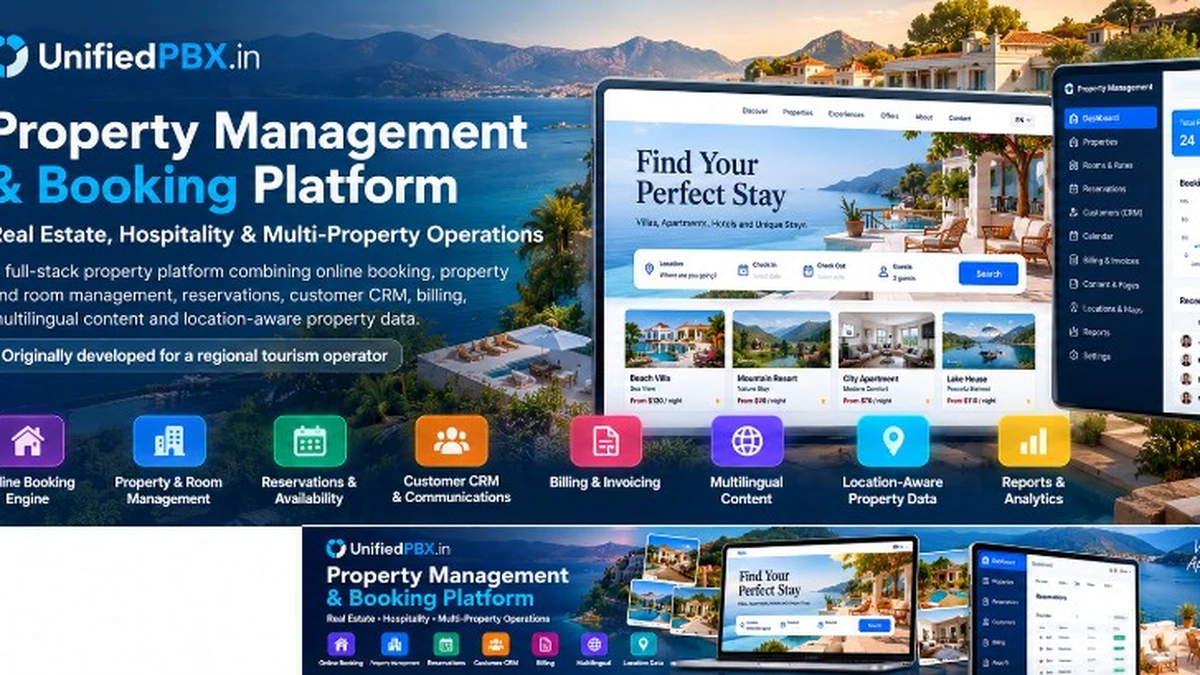
No. Real-time voice (Asterisk, FreeSWITCH, WebRTC, CCaaS, AI voice) is a deep specialty, but public work spans vertical SaaS and business systems: insurance ERP, telecom manufacturing ERP, SMS/WhatsApp CPaaS, hospitality and restaurant CMS/API, school ERP, care-home ops, field-service marketplaces, device license desks, membership loyalty, event platforms, equity research tools, legal AI and more. The thread is APIs-first software that must run in production—not slide decks.
Typical builds: custom CRM/ERP and RevOps platforms, multi-tenant SaaS, mobile + API verticals (booking, events, loyalty, compliance), AI agents and RAG with human handoff, and operator platforms (hosted PBX, dialer, messaging CPaaS). Examples live on Projects and vertical products—architecture follows your workflow, not a one-size template.
Yes, when boundaries are explicit: private data, tool APIs into CRM/ERP or ticketing, escalation to humans, and observability. Case studies label what shipped versus labeled modernization paths. We do not sell “AI inside” as a black box without integration design.
Yes. Founders hire for spikes, MVPs and being the only telephony or full-stack engineer on the team. Larger buyers hire for multi-tenant products, regulated workflows and production rescue. Engagement size varies; the first step is fit and architecture—not a generic hourly rate card.
Yes. Common entry points: one-way WebRTC audio, tenant isolation bugs, dialer/CCaaS scaling, broken AMI/ESL, slow APIs, legacy PHP/Laravel/CodeIgniter desks, or an AI demo that never reached real users. See Production rescue. Greenfield builds use the same discovery discipline.
Usually a short brief (goal, stack, timeline, constraints), then a discovery call—or a paid spike/audit when legacy risk is high. Larger builds use phased milestones or product-page RFQs with acceptance criteria. Hourly rescue is available; platform builds are scoped milestones—not open-ended staff augmentation by default.
Yes. Delivery is remote-first from Delhi with scheduled overlap for stand-ups. Written runbooks, async updates and agreed maintenance windows are standard for production changes.
Yes. MSPs, operators and SaaS founders hire for hosted PBX, CCaaS, CRM+voice, messaging CPaaS and industry desks they own—source, tenancy, billing hooks and data residency scoped in writing. This is build/partner delivery, not reselling Zoom, Teams or another vendor seat.
Case studies document architecture and honest gaps. Demos are working-system videos—not marketing animations. Reviews and Upwork history supplement the site. We do not invent revenue, uptime or customer counts.
One paragraph on the business goal, current stack, users/roles, must-have integrations, peak scale (calls, tenants, messages), deadline and whether you need greenfield, rescue or modernization. Screenshots, a failing trace or a short Loom beat a 40-page RFP. Email hello@unifiedpbx.in or use the project brief.
Client names are omitted on case studies when confidentiality requires it. NDAs are routine for production access. Public portfolio pieces use anonymized or legacy product names only with approval.
BSc Mathematics & Statistics, MSc Mathematics, MCA (IGNOU) and MBA Systems & Marketing (SMU). Verified credentials include Google Data Analytics, Google Project Management, Building with the Claude API, NPTEL Project Management for Managers, SWAYAM Digital Forensics, and Machine Learning with TensorFlow/Python (Udemy).
Describe the system or problem — get architecture direction
A workflow, repo, pcap, CRM/ERP brief, AI prototype or production incident is enough to start. The first reply is a technical review: whether the gap is AI, automation, communications, data or a system that should stay as it is.