Project overview
The brief was inbound and campaign calls that a model could handle until policy said transfer, voicemail or hangup. Demos that only work in a browser were out of scope.
Business challenge
Most failures are not prompts. They are 487s, barge-in, 800ms STT lag, and a model that tries to transfer a call it does not own.
Solution architecture
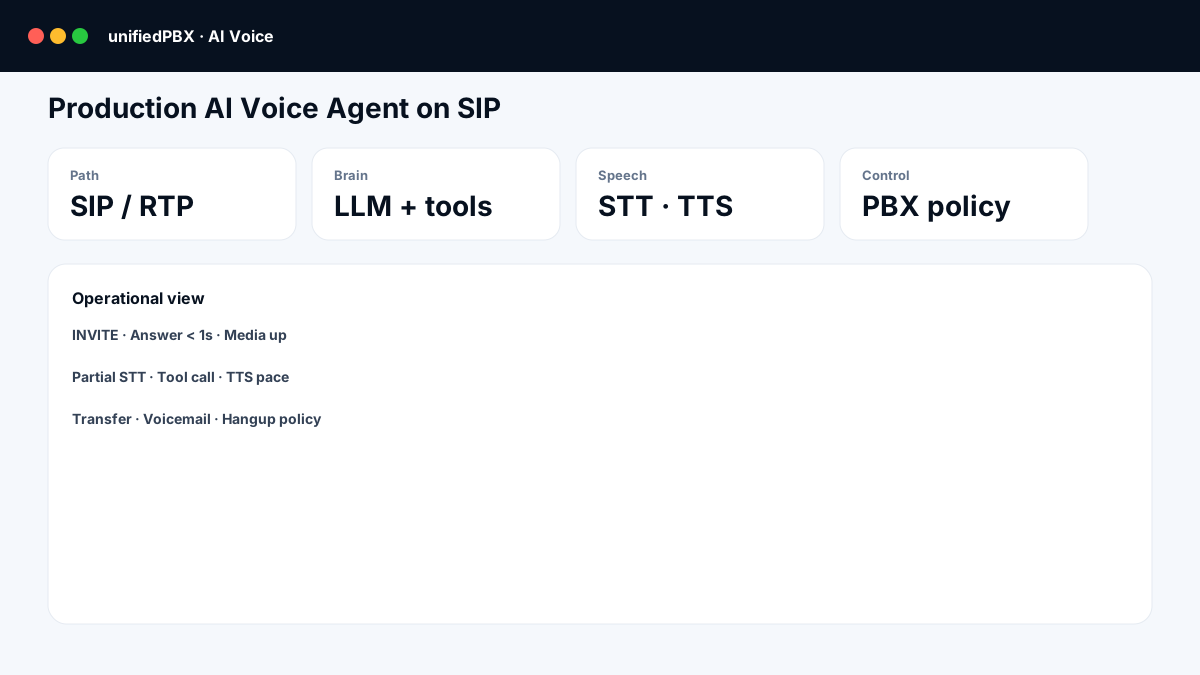
PBX answers SIP. A media bridge streams audio to STT. An agent runtime calls tools. TTS returns to the caller. Transfer and hangup stay on the call-control plane.
Keep the language model inside the agent runtime. The model may request “transfer to sales.” The PBX executes that after policy checks.
Technology stack
Key features
Real SIP path
Inbound DID and outbound campaign, not WebRTC-only.
Barge-in / VAD
Caller can interrupt the agent.
Tool-using agent
CRM, calendar, tickets — after identity.
Human handoff
Queue transfer with context, not a dead air drop.
My role
Implementation
Same architectural rules documented in the AI-voice SIP article on this site: media, state and policy first; model second.
Results / capabilities
- Live PSTN path
- Transfer to human queues
- Tool calls without giving SIP to the LLM
Building something in this class?
Share the workflow, current stack and constraints. The first reply is an architecture-minded review.
Discuss Your Project